 ultimate-guide
How to Pass the California Driving Test: 2026 Guide
Table of Contents
- What the California Driving Test Actually Involves
- Your California DMV Driving Test Checklist
- The California Pre-Drive Safety Check
- California Driving Test Mistakes That Cause Fails
- California Driving Test Practice: A Skill-by-Skill Plan
- Test Day Walkthrough: From Arrival to Results
- After the Test: Passing, Failing, and Retakes
- Frequently Asked Questions
Last Updated: October 17, 2026
What the California Driving Test Actually Involves
The California driving test is a two-part process: a written knowledge test and a behind-the-wheel drive test with a DMV examiner. Passing both is how you get a California driver's license, and each part tests something different. The written exam checks whether you know the rules of the road.
Most people prepare hard for one and wing the other. That's the first mistake.
Here's the short version of what each part involves:
| Test | Format | What It Measures | Where It Happens |
|---|---|---|---|
| Knowledge test | Multiple-choice questions on traffic laws and signs | Rule knowledge and sign recognition | DMV office, computer terminal |
| Behind-the-wheel test | Live drive with a DMV examiner in your vehicle | Vehicle control, observation, judgment | Public roads around the DMV office |
The California DMV driver's license guide is the official source for current requirements, and it's worth reading before you book anything.
Knowledge Test vs. Behind-the-Wheel Test
The knowledge test comes first. You answer questions drawn from the California Driver's Handbook, covering traffic signs, right-of-way, speed limits, and safety rules. You need a passing score to move on to a permit and, eventually, the drive test.
The behind-the-wheel test is a scored drive of roughly 20 minutes on real roads near the DMV office. The examiner sits beside you, gives instructions, and marks your performance against a standard scoring sheet. You're not being graded on charm. You're being graded on whether you drive predictably and safely.
How the DMV Examiner Scores Your Drive
The examiner scores your drive against a set of safety criteria, marking errors as you go. Minor errors add up. Certain mistakes are critical and end the test immediately, regardless of how well everything else went.
What most guides miss is that examiners aren't looking for perfection. They're looking for consistency: do you check your mirrors the same way every time, signal before every lane change, and hold a safe following distance without being reminded? Predictable driving scores well.
Your California DMV Driving Test Checklist
A California DMV driving test checklist starts with paperwork and a legal vehicle. Showing up without either means you don't test, no matter how ready you are. This is the least glamorous part of preparation and the one that cancels the most appointments.
Start with the documents. Then confirm the vehicle you're testing in is registered, insured, and passes a basic safety inspection. The examiner will check brake lights, turn signals, horn, and other equipment before you drive.
Documents and Vehicle Requirements
Bring your instruction permit, proof of insurance for the vehicle, and proof of registration. If you're under 18, a parent or guardian signature and proof of completed driver education and behind-the-wheel training hours apply.
The vehicle itself must be safe to drive: working seat belts for both seats, functioning brake lights and turn signals, a horn, and clean glass. A cracked windshield or a burned-out brake light is grounds to cancel the test.
What to Bring on Test Day
- Instruction permit
- Proof of insurance for the test vehicle
- Vehicle registration
- Parent or guardian signature, if under 18
- Proof of completed driver education and training, if under 18
- A safe, registered vehicle with working lights, horn, and seat belts
- Glasses or contacts if your permit requires corrective lenses
The California Pre-Drive Safety Check
The California pre-drive safety check is the first scored segment of the drive test. Before you leave the lot, the examiner asks you to demonstrate vehicle controls and safety equipment. Fumbling here sets a nervous tone for everything that follows.
Practice this sequence in your own car until it's boring. That's the goal: boring.
Vehicle Controls and Safety Equipment
The examiner will ask you to show turn signals, headlights, brake lights, the horn, windshield wipers, and the parking brake. You'll also demonstrate the defroster and emergency flashers. Know where every control lives without hunting for it. In practice, this means sitting in your car in a parking lot and running the full sequence five times before test day.
Mirrors, Blind Spots, and Signaling
Set your mirrors before you move. Adjust the rearview and both side mirrors, then demonstrate a shoulder check by turning your head to look over your shoulder. Examiners watch for the head turn, not just the eye movement. Signal before every turn and lane change, and cancel the signal afterward.
A common mistake is signaling after starting the maneuver. Signal first, then mirror, then shoulder check, then move. Same order, every time.
California Driving Test Mistakes That Cause Fails
California driving test mistakes fall into two buckets: small errors that accumulate and critical errors that end the drive on the spot. Understanding the difference changes how you practice.
Small errors include hesitant turns, wide lane position, or a missed mirror check. They add up but don't automatically fail you. Critical errors are different. They reflect a safety violation serious enough that the examiner stops the test.
Critical Errors and Automatic Fails
The examiner intervenes, physically or verbally, when a mistake becomes dangerous. That intervention is usually an automatic fail. The pattern behind most of them is the same: the driver stops observing.
Common critical errors include:
- Failing to yield the right-of-way at an intersection
- Running a red light or stop sign
- Changing lanes without checking blind spots
- Speeding through a school zone or residential street
- Striking a curb hard during a turn or parking maneuver
- Ignoring the examiner's instruction to stop or slow down
The fix for nearly all of them is observation discipline. Look, signal, check, then move, and do it the same way at every intersection and every lane change.
California Driving Test Practice: A Skill-by-Skill Plan
California driving test practice works best when you build skills in the order the test scores them. Start with observation habits, layer in maneuvers, then rehearse full drives. Random practice builds random habits.
Structure a week of practice around one skill per session:
- Mirror and shoulder check drills. Drive a quiet residential loop, checking mirrors and blind spots at every intersection out loud.
- Signaling discipline. Narrate every signal before every turn and lane change for a full session.
- Intersection judgment. Practice right-of-way at four-way stops and left turns at signalized intersections.
- Lane changes. Practice the full mirror-signal-shoulder check sequence on multi-lane roads.
- Parking maneuvers. Rehearse parallel parking and curb parking until the reference points feel automatic.
- Full mock drives. Run a complete 20-minute route with someone playing examiner, scoring as you go.
Practice Scenarios That Mirror the Real Test
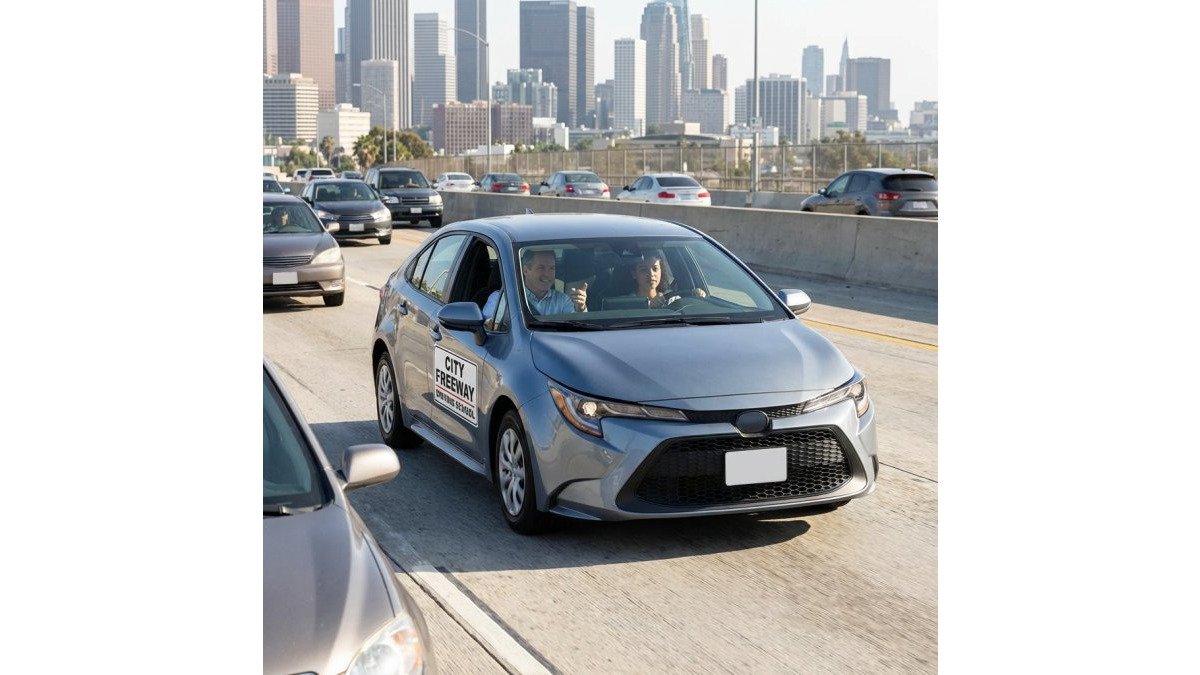
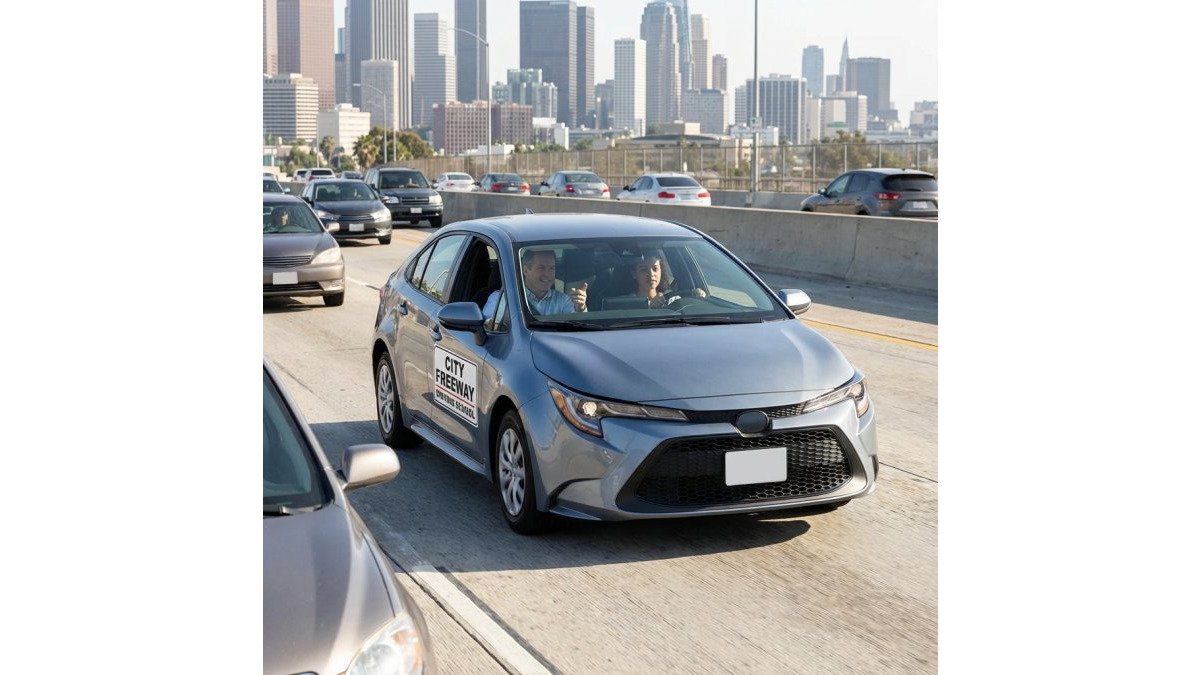
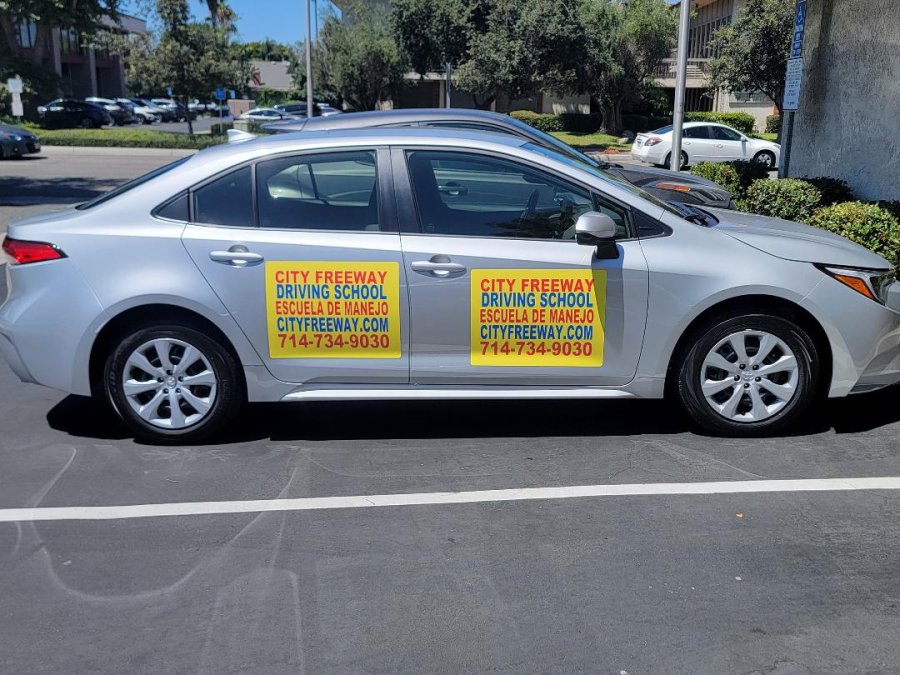
The real test happens on public roads around the DMV office, so practice there. Drive the streets near your test location, note the intersections, speed limit changes, and school zones, and rehearse them until they're familiar. City Freeway Driving School runs behind-the-wheel training on these same Orange County roads, including freeway lessons, so students practice in the conditions they'll actually be tested in.
Test Day Walkthrough: From Arrival to Results
Test day has a predictable sequence, and knowing it cuts the anxiety. Arrive early, check in, complete the pre-drive check, drive, and get your result before you leave the office.
Here's the full sequence:
- Arrival. Arrive 15 to 30 minutes early and park in the designated test area.
- Check-in. Present your documents at the window and confirm your appointment.
- Vehicle inspection. The examiner checks lights, signals, horn, and seat belts.
- Pre-drive demonstration. You show controls and safety equipment from the driver's seat.
- The drive. Roughly 20 minutes on public roads with examiner instructions.
- Return and result. You park, the examiner totals the score, and you receive a pass or fail notice on the spot.
If you pass, you complete the licensing steps at the counter. If you don't, the examiner tells you what went wrong, and you can book a retake. Many drivers pass on the second attempt.
Nerves are the wildcard here. A first-time driver who has rehearsed the sequence, driven the neighborhood, and practiced with an instructor sitting beside them has far less to be anxious about.
After the Test: Passing, Failing, and Retakes
Passing means you finish the licensing process at the counter and leave with your license or instructions for the interim document.
Use the score sheet as a study plan.
If you passed, complete the licensing steps at the counter and confirm whether you leave with a temporary document or a mailed license.
Nerves are the wildcard here.
Driving Lessons in Orange County for Teens and Adults. We are City Freeway Driving School in Tustin, Serving most cities in Orange County, CA.
Affordable pricing is part of the point.
Frequently Asked Questions
Do I fail the California driving test if I can't parallel park?
Not necessarily. Parallel parking is one maneuver the examiner may ask you to perform, but it is not an automatic fail if you execute it imperfectly. What matters is that you follow the proper sequence: signal, check mirrors and blind spots, move slowly, and maintain control. If you touch the curb or miss a step, you may lose points, but you can still pass if your overall drive meets the scoring criteria. Practice parallel parking in a quiet residential area or empty lot until the steps feel automatic.
What is the number one reason for failing a driving test?
The most common reason for failing is a critical error, such as running a red light, failing to yield the right-of-way, or ignoring a traffic sign. These mistakes immediately end the test because they show a safety risk. Other frequent issues include poor observation at intersections, not checking blind spots before lane changes, and rolling stops. Focusing on situational awareness and following every traffic law exactly as written in the California Driver's Handbook will help you avoid these fails.
What are automatic fails on a California driving test?
Automatic fails, also called critical errors, include actions that endanger you, the examiner, or other road users. Examples are running a red light or stop sign, failing to yield to pedestrians or vehicles with the right-of-way, making an unsafe lane change, or driving over the curb. The examiner will also stop the test if you violate a traffic law or ignore an instruction. Review the California Driver's Handbook for the full list, and practice with a licensed instructor who can point out these risks before test day.
What should I bring to my California driving test?
Bring your instruction permit, proof of insurance for the vehicle, and proof of registration. If you are under 18, you also need proof of driver education and behind-the-wheel training completion. The vehicle must have a valid registration and insurance card. Also bring your glasses or contacts if your permit requires corrective lenses. Check the California DMV driving test checklist before you leave home to avoid a canceled appointment.
How many mistakes can you make on the California driving test?
California uses a point system. You can accumulate up to 15 points from minor errors and still pass, but any critical error results in an automatic fail. Minor mistakes include things like forgetting to signal, improper lane position, or hesitant steering. The examiner will mark errors on a scoring sheet, and you need to stay under the threshold. Practicing with a driving school helps you identify and correct small habits that add up.
What should I practice the day before my driving test?
The day before, focus on a calm review rather than cramming. Drive the route near the DMV office if possible, practice smooth starts and stops, and run through the pre-drive safety check with your instructor or parent. Review the California driving test mistakes list and visualize each step. Get a good night's sleep and avoid practicing late into the evening. A short, confident practice session is better than a long, stressful one.