 how-to
Beginner Driving Tips for California Roads
Last Updated: October 22, 2026
Quick Summary
Beginner driving tips for California roads start with understanding that California's driving environment is different from many other states, with busier roads, varying regional weather, and specific new driver restrictions. Practice progressively in quiet neighborhoods first, then move to busy streets and freeways to build confidence safely.
- New drivers under 18 cannot drive between 11 p.m. and 5 a.m. and cannot use cell phones while driving.
- Use the three-second rule to maintain safe following distance by counting seconds between when the car ahead passes a fixed object and when you do.
- In rain, increase following distance to four or five seconds and avoid using cruise control on wet roads.
- Practice parallel parking at least twice a week before your DMV road test, which typically lasts 20-30 minutes.
Table of Contents
- Master the Basics: Beginner Driving Tips for California Roads
- California Road Rules for New Drivers
- Building Confidence in Heavy Traffic and Urban Driving
- Freeway Driving Tips for Beginners
- Safe Following Distance While Driving
- Tips for Driving in the Rain and Challenging Conditions
- Preparing for Your DMV Road Test
- Frequently Asked Questions
Master the Basics: Beginner Driving Tips for California Roads
Driving on California roads presents unique challenges for new drivers. From heavy urban traffic to sprawling freeways, the state demands quick decision-making and solid foundational skills. City Freeway Driving School has spent years helping teens and adults build the confidence they need to navigate these roads safely and pass their DMV road test.
Beginner driving tips for California roads start with understanding that California's driving environment is different from many other states. The roads are busier, the weather varies dramatically by region, and the laws have specific requirements for new drivers. This guide breaks down the essential skills every new driver needs to master before hitting the road alone.
California Road Rules for New Drivers
California has specific laws that apply to drivers with a learner's permit or provisional license. Understanding these rules isn't just about passing the DMV test, it's about staying safe and legal while you develop your skills.
New drivers under 18 must follow strict restrictions. You cannot drive between 11 p.m. and 5 a.m., with limited exceptions. You also cannot use a cell phone while driving, even hands-free devices.
Speed limits matter more than you might think. California posts speed limits on most roads, and new drivers should follow them exactly. Don't assume you can drive faster just because other cars are doing so.
Stop signs and red lights require complete stops. Many new drivers roll through or don't come to a full stop. A complete stop means your vehicle stops moving completely. Count to three before proceeding. This habit prevents accidents at intersections.
Road signs communicate critical information. Yellow signs warn of hazards ahead. White signs show regulations. Red signs indicate stops or prohibitions. Learn what each shape means: octagon = stop, triangle = yield, diamond = warning. Recognizing signs quickly helps you react appropriately.
Traffic laws also include rules about following distance, lane changes, and turning. You must signal before turning or changing lanes. You must check your mirrors and blind spots before moving. These actions take practice but become automatic with repetition.
Building Confidence in Heavy Traffic and Urban Driving
Urban driving is where most new drivers feel nervous. Traffic moves fast, pedestrians appear suddenly, and you need to make decisions in seconds. Building confidence here means starting small and progressing gradually.
Begin in low-traffic neighborhoods. Drive during off-peak hours, early morning or mid-afternoon on weekdays. Get comfortable with basic maneuvers: turning, stopping, parking. Once these feel natural, move to busier streets with more traffic lights and pedestrians.
Heavy traffic requires staying calm and focused. Your hands should grip the steering wheel at 9 and 3 o'clock. Your eyes should scan ahead, not just at the car in front of you. Look for brake lights, pedestrians stepping into the street, and cyclists.
Lane changes in heavy traffic need planning. Signal at least three seconds before moving. Check your mirrors. Look over your shoulder at your blind spot. Only change lanes when you're certain it's safe. Never assume a driver sees you just because you signaled.
Pedestrians are unpredictable. They cross against signals, step out between parked cars, and look at their phones. Assume pedestrians will do something unexpected. Slow down near crosswalks. Make eye contact with pedestrians before proceeding.
Parking in busy areas challenges many new drivers. Parallel parking is required for the DMV test, so practice it regularly. Perpendicular parking (pulling straight into a space) is easier but still requires precision. Start in empty parking lots with painted lines.
| Urban Driving Challenge | What To Do | Why It Matters |
|---|---|---|
| Heavy traffic | Stay calm, scan ahead, anticipate stops | Prevents rear-end collisions |
| Pedestrians | Slow down, watch for sudden movement | Protects vulnerable road users |
| Lane changes | Signal, check mirrors, verify blind spots | Avoids side-impact accidents |
| Parking | Practice in quiet areas first | Builds precision and confidence |
Freeway Driving Tips for Beginners
Freeway driving intimidates many new drivers. The speed, the volume of traffic, and the high stakes feel overwhelming. But freeways are actually predictable once you understand the patterns.
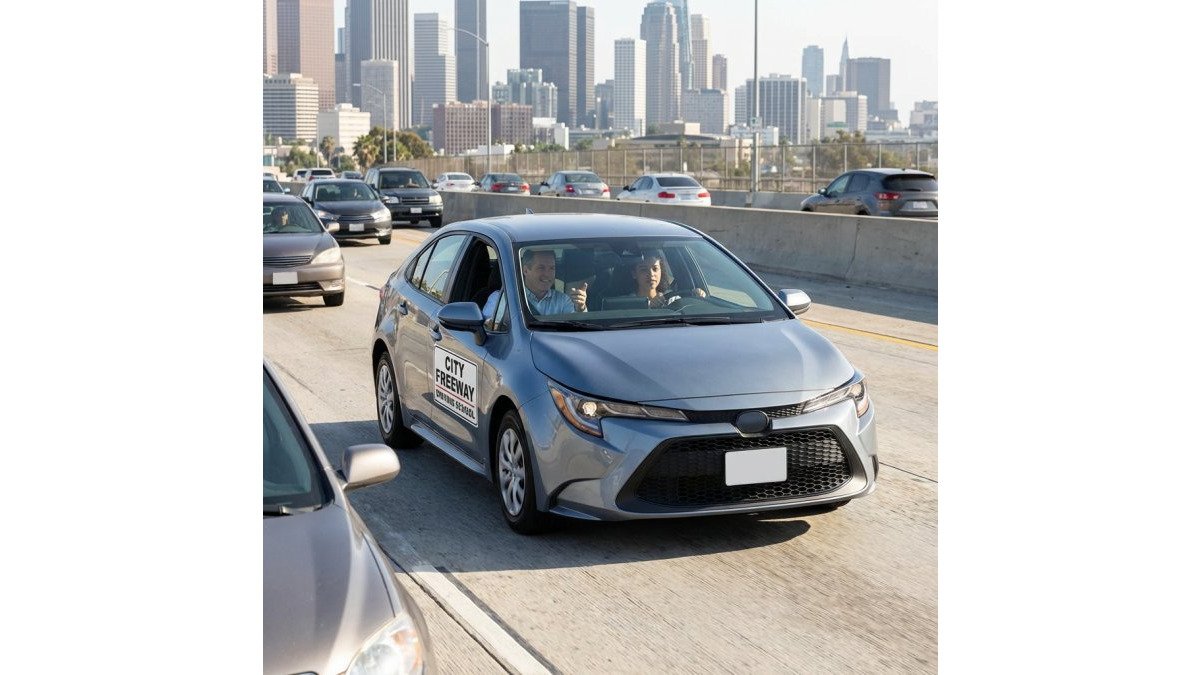
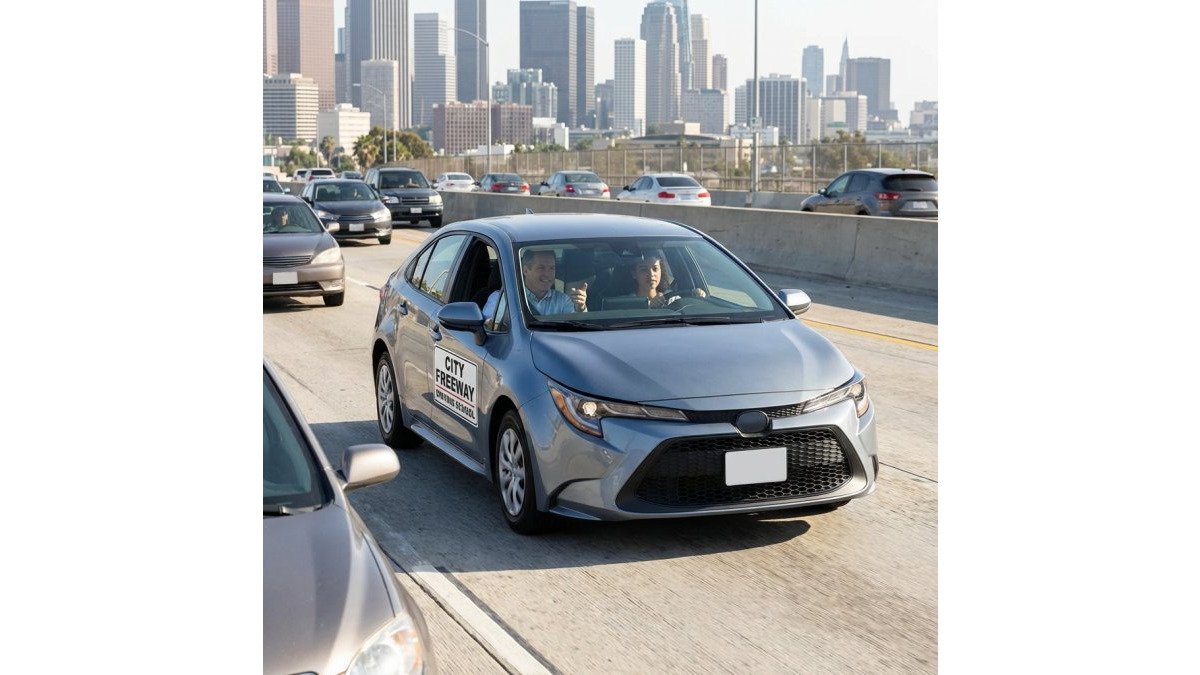
Start freeway driving with a licensed adult in the car. If you want structured guidance, driving lessons in the freeway can help you build confidence in a controlled environment with a professional instructor.
Keep right except to pass. The rightmost lane moves slower and is safest for new drivers. Stay in one lane for long stretches. Frequent lane changes increase accident risk. Signal before changing lanes.
Maintain a safe following distance from the car ahead. A good rule is the three-second rule: pick a fixed object ahead, count the seconds between when the car in front passes it and when your car does.
Exit ramps come up faster than you expect. Watch for exit signs a half-mile ahead. Move to the right lane well before your exit. Signal and slow down gradually.
Freeway driving requires constant awareness. Check mirrors every five to ten seconds. Scan ahead for brake lights indicating traffic slowing. Watch for merging traffic. Notice weather changes. Stay alert for emergency vehicles.
Safe Following Distance While Driving
Safe following distance is one of the most important skills new drivers must master. It's the space between your car and the vehicle ahead. This distance gives you time to stop if the car in front brakes suddenly.
The three-second rule works in most conditions. At 35 mph, this equals about 100 feet. At 55 mph, it's about 160 feet. At 70 mph, it's about 210 feet. These distances sound long, but they're necessary for safety.
To measure your following distance, pick a fixed object ahead, a road sign, mile marker, or tree. When the car ahead passes it, start counting.
Wet roads demand extra distance. Rain reduces tire grip and increases stopping distance. Add one or two extra seconds to your following distance. If visibility is poor, increase it even more. The same applies to fog, snow, or gravel roads.
Heavy traffic makes maintaining distance harder. Drivers cut in front of you constantly. Don't match their aggressive behavior. When someone cuts in, simply ease off the accelerator and let them get ahead. Maintaining your distance is more important than keeping a specific position.
Tailgating, driving too close, causes most rear-end collisions. It's also illegal in California. If another driver tailgates you, don't brake suddenly. Ease off the accelerator gradually. Let them pass. Never engage in aggressive driving games.
Tips for Driving in the Rain and Challenging Conditions
California weather changes quickly in some regions. Rain, fog, and heat all affect driving conditions. New drivers need to adjust their techniques for these situations.
Rain reduces tire traction. Your tires need more distance to stop. Increase your following distance to four or five seconds. Slow down before entering curves. Don't use cruise control on wet roads. Keep both hands on the wheel.
Visibility matters as much as traction. Turn on your headlights when it rains, even during the day. This helps other drivers see you. Use low-beam headlights in fog, not high beams. High beams reflect off fog and make visibility worse. Reduce your speed in fog.
Heat affects tire pressure and engine performance. Check your tire pressure regularly. Underinflated tires wear faster and reduce fuel economy. Overinflated tires reduce grip. Keep your engine cool by checking coolant levels. Don't drive in extreme heat without water in your car.
Wind can push your car sideways, especially on freeways. If you're driving a light vehicle and encounter strong wind, grip the wheel firmly and reduce speed. Crosswinds are most dangerous when entering or leaving tunnels. Be ready for sudden gusts.
Night driving requires extra caution. Your depth perception decreases in darkness. Headlights don't show as far ahead as you might think. Reduce your speed at night. Increase your following distance. Avoid looking directly at oncoming headlights; look slightly to the right.
Preparing for Your DMV Road Test
The DMV road test evaluates whether you can drive safely and follow traffic laws. The test typically lasts 20-30 minutes.
Before your test, practice all required maneuvers regularly. Parallel parking is the skill most new drivers struggle with. Practice it at least twice a week.
Know the test route if possible. Some DMV offices publish their test routes online. Drive these routes multiple times. Learn where traffic is heaviest, where pedestrians cross, and where tricky intersections exist.
Get plenty of sleep the night before your test. Fatigue impairs judgment and reaction time. Eat a healthy breakfast. Avoid caffeine, which can make you jittery.
During the test, follow instructions exactly. If the examiner says "turn left at the next light," turn left at the next light, not the one after. Listen carefully.
Stay calm if you make a mistake. One small error doesn't mean you'll fail. The examiner is looking for safe driving habits, not perfection.
After the test, whether you pass or fail, ask for feedback. If you fail, the examiner will tell you which skills need improvement. Practice those specific areas before retesting.
Many new drivers benefit from professional D.M.V test preparation and drivers training to ensure they're ready.
Beginner driving tips for California roads require patience, practice, and professional instruction. The roads in California present unique challenges, but they're manageable when you build skills progressively.
Driving Lessons in Orange County for Teens and Adults
Driving Lessons in Orange County for Teens and Adults. We offer Driver Ed online for $30.00 , Drivers Training 6 hours from $440.00 and the package of Driver Ed online and 6 hours of behind the wheel training from $450.00.
Frequently Asked Questions
What should a beginner driver's following distance be on California roads?
The three-second rule is your foundation: at any speed, stay three seconds behind the vehicle ahead. In heavy traffic, rain, or at night, increase this to four or five seconds. This distance gives you time to react and brake safely if the car ahead stops suddenly. On freeways, beginners should be especially cautious and maintain this distance even when traffic feels slow.
How should a beginner merge onto a freeway safely?
Check your mirrors and blind spots first. Accelerate smoothly to match freeway traffic speed before merging. Look for a gap between vehicles, signal early, and merge at a steady angle rather than sharply. Never force your way in; if traffic is too dense, wait for a safer opening. Practice this maneuver multiple times with an instructor before attempting it alone on busy freeways.
What are the key California driving rules new drivers must follow?
California requires seatbelts for all occupants, hands-free devices for phone calls, and zero tolerance for texting while driving. Speed limits vary by road type: typically 25 mph in residential areas, 35-45 mph on local roads, and 55-70 mph on freeways. Right turns on red are allowed after a complete stop unless posted otherwise. Teen drivers face additional restrictions under the Graduated Driver License program, including passenger and nighttime limitations.
Why is professional driving instruction worth the investment for new drivers?
Professional instructors teach you California-specific rules, freeway procedures, and defensive driving techniques that go beyond what you learn in online driver education. They build your confidence in real traffic situations, identify bad habits early, and prepare you specifically for your DMV road test. This structured training reduces anxiety and increases your chances of passing on the first attempt, saving time and stress.