 how-to
Freeway Driving Tips for Nervous Drivers: Build Confidence
Table of Contents
- Understanding Freeway Driving Anxiety and Why It Happens
- How to Overcome Driving Anxiety: Mental Preparation and Breathing Techniques
- How to Merge Onto the Freeway: Step-by-Step Procedure
- How to Practice Driving on the Freeway: A Gradual Progression Plan
- Lane Changing and Following Distance: Essential Freeway Skills
- What to Do If You Miss Your Freeway Exit
- The Role of a Driving Instructor in Building Freeway Confidence
- Freeway Driving Tips for Nervous Drivers: Your Action Plan
- Frequently Asked Questions
Last Updated: October 15, 2026
Understanding Freeway Driving Anxiety and Why It Happens
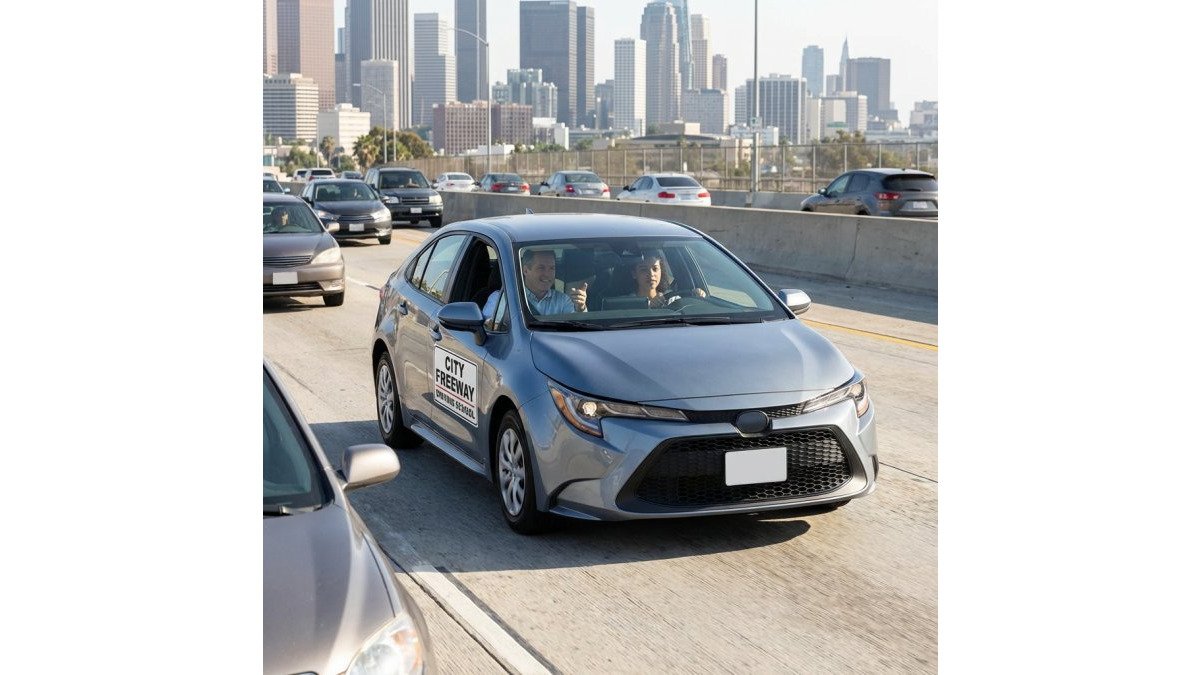
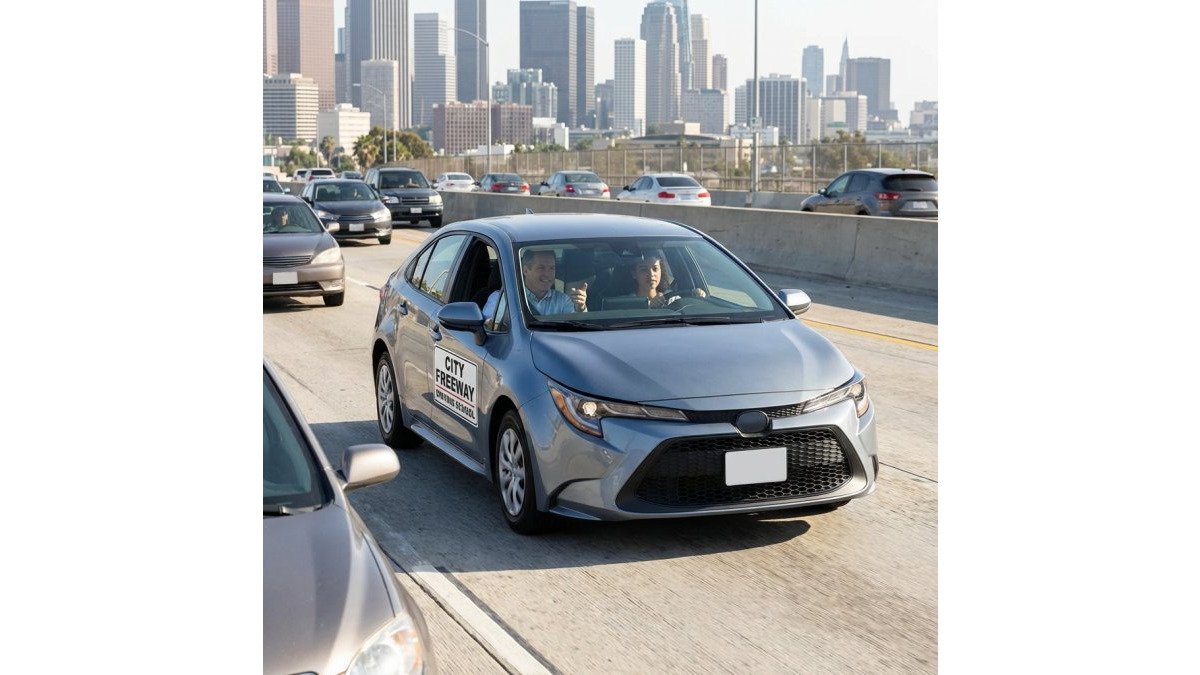
Freeway driving anxiety is real: many nervous drivers feel their heart race when merging onto a busy highway, which is why freeway driving tips for nervous drivers are essential to building confidence.
Anxiety often stems from lack of exposure. A driver who has never merged doesn't know what to expect, and the unknown feels dangerous.
City Freeway Driving School works with nervous drivers every day. Instructors know anxiety is normal and guide students step by step, building confidence gradually rather than forcing exposure too quickly.
How to Overcome Driving Anxiety: Mental Preparation and Breathing Techniques
Mental preparation happens before you turn the key. A driver who expects to panic tenses up; one who expects to succeed stays calm. The difference is rarely willpower, it's a repeatable pre-drive routine.
The 10-Minute Pre-Drive Routine
Run this checklist in the driveway, not on the on-ramp:
- Set navigation before you move. Enter the destination and mount the phone where a glance takes under a second, fumbling with GPS at 65 mph causes errors.
- Adjust seat and mirrors. You should press the brake to the floor with a slight knee bend and see the horizon in the upper third of the windshield. Set side mirrors so you barely see your own car's edge.
- Check fuel and tire pressure. A low-fuel light mid-merge turns anxiety into an emergency. Fill up the day before.
- Pick your lane plan. Decide your lane and exit in advance; uncertainty fuels anxiety.
- Identify two bail-out points. Knowing the next two exits or rest areas reduces the trapped feeling that drives most panic.
Breathing That Actually Works in the Car
Breathing is your most powerful tool. Anxiety makes breathing shallow and fast, triggering fight-or-flight; slow, deep breathing signals your nervous system that you're safe.
Try this technique while driving:
- Breathe in through your nose for a count of four
- Hold the breath for a count of four
- Exhale through your mouth for a count of four
This pattern calms your nervous system. Practice it at home first, then use it in the car before entering the freeway.
What to Do During a Panic Episode While Driving
If panic hits while you are moving:
- Do not slam the brakes. Sudden braking in freeway traffic is more dangerous than the panic itself.
- Ease off the gas and keep both hands on the wheel. Reduce speed gradually while holding your lane.
- Turn on your hazard lights if moving noticeably slower than traffic.
- Run the breathing pattern once. Four in, four hold, four out, four pause.
- Exit at the next safe off-ramp or pull into a rest area, gas station, or parking lot. Do not stop on the shoulder unless the vehicle is disabled, it's one of the most dangerous places on a freeway.
- Park, turn off the engine, and wait five to ten minutes. Panic peaks and passes; then decide whether to continue or take surface streets home.
The first panic episode feels catastrophic, the second manageable, because you now have a procedure, and that knowledge alone reduces episode frequency.
Visualization and Route Planning
Mental preparation also includes route planning. Know exactly where you're going and where your exits are; removing the surprise element decreases anxiety.
Visualization works best when specific. Instead of picturing yourself "driving calmly," rehearse the exact sequence: the on-ramp curve, mirror check, the gap you'll look for, the merge, the lane you'll settle into, and the exit sign you're watching for.
How to Merge Onto the Freeway: Step-by-Step Procedure
Merging is where most nervous drivers feel the most anxiety. The process seems chaotic at first. But it follows a logical sequence. Master the steps, and merging becomes routine.
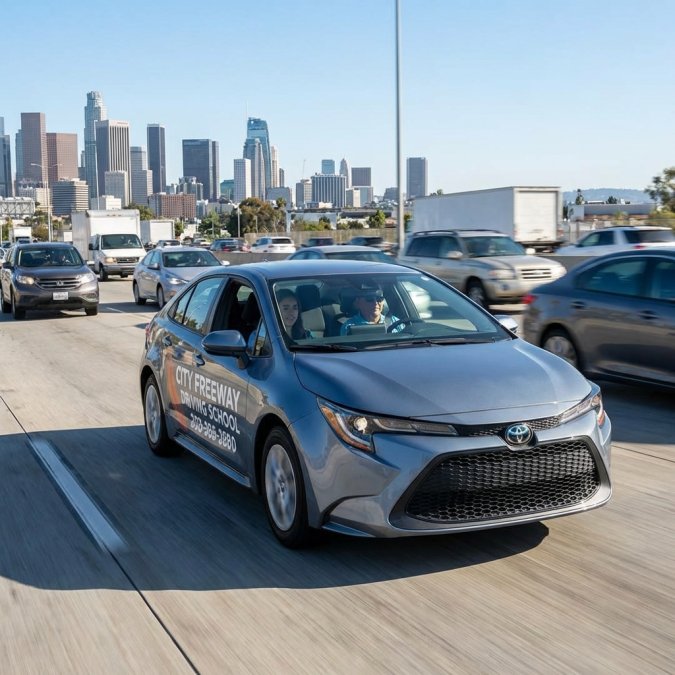
Checking Your Mirrors and Blind Spots
Before touching the gas pedal, check your side mirrors and rearview mirror. Then turn your head over your shoulder to check the blind spot, the area mirrors cannot show you. Many accidents happen because drivers skip this two-second check.
Timing Your Merge and Adjusting Speed
The on-ramp is your acceleration zone. Don't merge at 35 mph when traffic moves at 65, match traffic speed before merging. This is the single most important rule.
Increase speed gradually so that by the end of the on-ramp you're moving at roughly the same speed as the traffic you're joining. Look for a gap, signal, check mirrors and blind spot once more, then smoothly steer into the lane.
How to Practice Driving on the Freeway: A Gradual Progression Plan
Nervous drivers don't need to jump into rush-hour traffic on day one. Gradual exposure, start small, build up, reduces panic and builds real confidence.
Starting with Familiar, Low-Traffic Routes
Choose a freeway you know at a light-traffic time, early morning or late evening. Your first goal isn't speed but experiencing the freeway environment: drive at a comfortable speed, stay in the right lane, and notice how the car feels at higher speeds. Keep it short, fifteen minutes is enough.
After your first successful drive, repeat the same route at the same time several times. Repetition builds confidence faster than variety as your nervous system learns the situation is safe.
Building Up to Peak Traffic Times
Once comfortable on quiet freeways, gradually increase the challenge: slightly busier times, a few more miles, different on-ramps. Each small success builds on the previous one, and after several weeks you'll handle moderate traffic without panic. Only then tackle rush hour, by that point your confidence will be real, not forced.
Lane Changing and Following Distance: Essential Freeway Skills
Lane changing intimidates many nervous drivers, but the process is straightforward once you understand it.
To change lanes safely, follow this sequence:
- Check your mirrors and blind spot
- Signal your intention
- Wait one to two seconds
Signal early so other drivers have time to see your signal and adjust, don't surprise them.
Following distance matters equally. Many nervous drivers tailgate without realizing it. Use the three-second rule: pick a fixed object ahead, and when the vehicle in front passes it, count "one thousand one, one thousand two, one thousand three." If you pass the object before finishing, you're too close.
What to Do If You Miss Your Freeway Exit
Missing an exit happens to experienced drivers. Don't brake suddenly or cut across multiple lanes, stay calm, take the next exit, and use your GPS to find an alternate route. Adding ten minutes beats causing an accident. This is a valuable lesson for nervous drivers: mistakes aren't catastrophic, and knowing you can recover reduces anxiety significantly.
The Role of a Driving Instructor in Building Freeway Confidence
Professional instruction accelerates progress. For freeway anxiety specifically, the difference is usually measured in weeks, not months.
What a Trained Instructor Actually Does Differently
Third, an instructor has worked with hundreds of nervous drivers and knows which local on-ramps are gentler, which times are calmer, and which fears surface at which stage.
Fourth, an instructor teaches mental skills alongside mechanics, the pre-drive routine, breathing pattern, and panic-episode procedure above. Mechanics without anxiety management produces a driver who can merge but dreads it.
Local Coverage and Flexible Scheduling
City Freeway Driving School is based in Tustin and serves most cities in Orange County, including Irvine, Orange, Santa Ana, Tustin, Costa Mesa, Anaheim, and many more. Lessons are available seven days a week with a flexible schedule designed around work, school, and family commitments. Appointments are typically available the same week you enroll, so nervous drivers do not lose momentum waiting for an opening.
Affordable Pricing and What Each Course Includes
Driving Lessons in Orange County for Teens and Adults. We are City Freeway Driving School in Tustin, Serving most cities in Orange County, CA. We offer Driver Ed online for $30.00, Drivers Training 6 hours from $440.00 and the package of Driver Ed online and 6 hours of behind the wheel training from $450.00.
Preparing for the Driving Test
Professional instruction also prepares you for the actual driving test. Examiners watch for mirror checks, signal timing, speed control, lane position, and smooth merging. A trained instructor knows exactly what will be tested and can run practice routes that mirror the real thing, reducing anxiety on test day and the chance of a retest.
When to Consider Professional Support Beyond Driving Lessons
Driving instruction addresses skill and exposure. If anxiety persists despite consistent practice, panic attacks even as a passenger, or fear interfering with work, school, or daily life, talk to a physician or licensed mental health professional. Severe driving anxiety is treatable, and many people combine instruction with short-term therapy or medication. A driving school teaches the skill; a clinician addresses the underlying anxiety.
Freeway Driving Tips for Nervous Drivers: Your Action Plan
Building freeway confidence requires a structured approach:
Week 1-2: Mental Preparation
- Practice visualization daily
- Learn the breathing technique
- Study your practice route and identify low-traffic times
Week 3-4: First Freeway Drives
- Complete three to four short drives on quiet freeways
- Focus on merging and maintaining speed
- Practice at the same time each day
Week 5-8: Building Skills
- Extend driving time gradually
- Practice lane changing in light traffic
- Try different on-ramps and exits
Week 9-12: Moderate Traffic
- Drive during slightly busier times on longer routes
- Prepare mentally for rush hour
Week 13+: Advanced Practice
- Tackle rush hour and unfamiliar freeways
- Practice in various weather conditions
This timeline isn't fixed. Some progress faster, others need more time, progress matters more than speed.
Driving Lessons in Orange County for Teens and Adults. City Freeway Driving School in Tustin serves most cities in Orange County, including Irvine, Orange, Santa Ana, Tustin, Costa Mesa, Anaheim, and many more, with flexible scheduling seven days a week. The school offers driver education and behind-the-wheel training packages designed to build the confidence nervous drivers need, taught by experienced instructors trained to work with anxious students.
Frequently Asked Questions
Is it normal to feel anxious when driving on the freeway?
Yes, freeway anxiety is common, especially for new drivers and those returning to driving after a break. The combination of speed, multiple lanes, and heavy traffic triggers nervousness in many people. The good news is that anxiety decreases significantly with gradual exposure and practice. Many drivers find their confidence builds naturally as they gain experience on the freeway and develop a sense of control over their vehicle.
How can a driving instructor help with freeway anxiety?
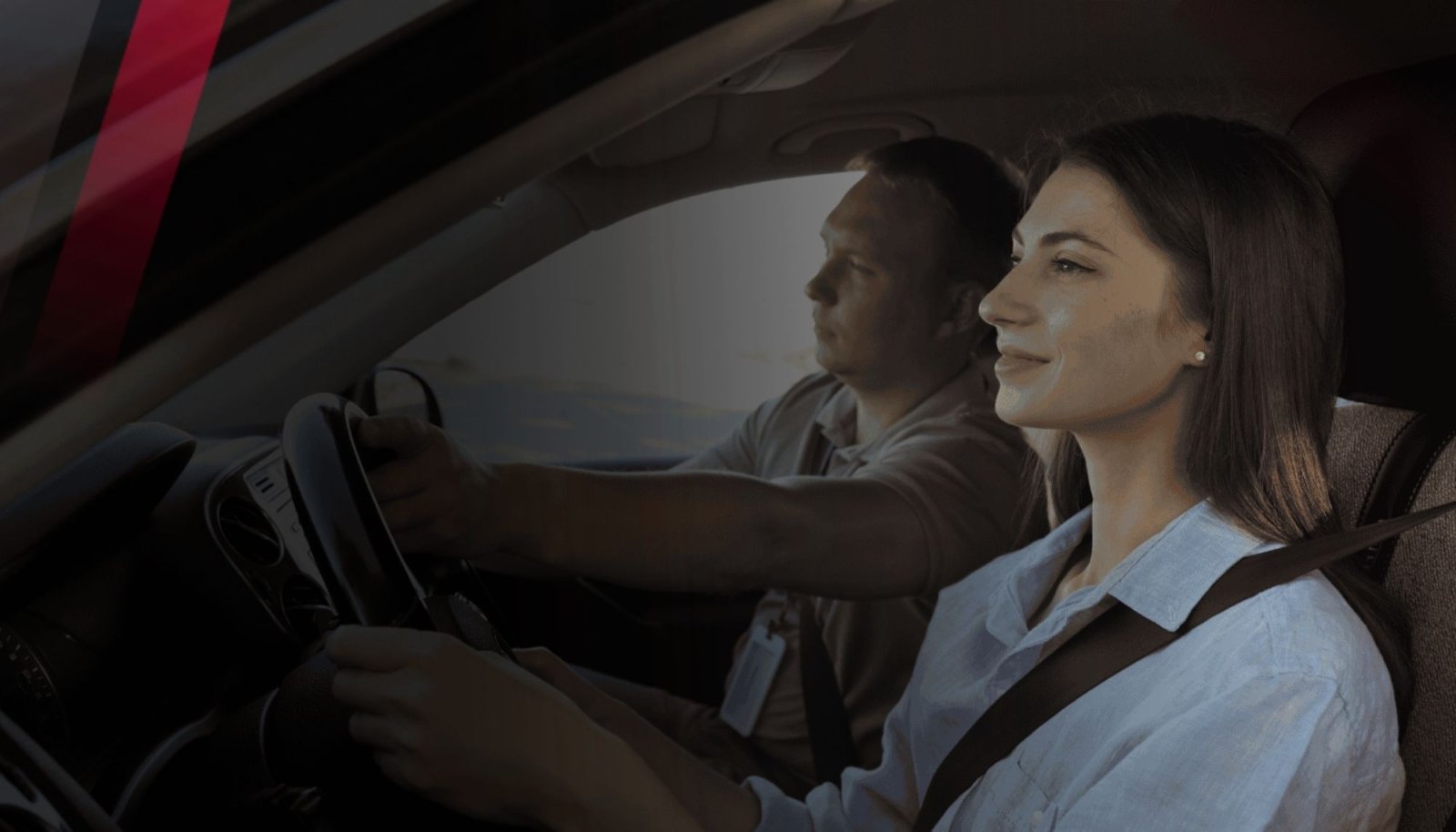
A qualified driving instructor provides hands-on guidance, real-time feedback, and a calm presence during freeway practice. They teach you specific merging and lane-changing techniques, help you practice in progressively busier traffic conditions, and can model safe driving behavior. An instructor also helps you recognize when you're ready to move to the next challenge level, ensuring you build confidence at a pace that works for you rather than pushing too fast.
What should I do if I feel overwhelmed while driving on the freeway?
If you feel panicked or overwhelmed, use your breathing techniques: slow, deep breaths in through your nose and out through your mouth. Maintain steady pressure on the accelerator and avoid sudden movements. When safe, signal and move to the right lane to create distance from traffic. If you need to stop, look for a safe rest area or exit. Remember that pulling over is always an option, it's better to pause and calm down than to continue while distressed.
How can I practice freeway driving safely as a beginner?
Start on familiar, less-busy highways during off-peak hours, such as mid-morning or early afternoon. Begin with short trips on segments you know well. Gradually increase your exposure by choosing routes with more traffic, practicing lane changes in lighter conditions, and eventually working up to busier times. Always have a calm, experienced passenger or professional instructor with you during early practice sessions. This structured progression builds genuine confidence rather than forcing you into overwhelming situations.