 how-to
How Do You Handle Driving in Heavy Rain Safely?
Quick Summary
Slow down first, since speed is the factor you control most directly in heavy rain, and leave far more space than usual between you and the car ahead. Heavy rain can reduce average vehicle speeds by 3 to 16 percent. If you feel the steering go light, ease off the accelerator and do not brake hard.
- A common rule of thumb is to reduce speed by one-third on wet roads.
- Ease off the gas early when rain starts, before the car starts to slide.
- Brake earlier and lighter, and finish braking before entering a curve.
- Turn on low-beam headlights as soon as rain starts, not when visibility gets bad.
- At night, watch the right edge of your lane and avoid staring at oncoming headlights.
Table of Contents
- Slow Down First: Why Speed Is Your Biggest Lever in Heavy Rain
- How to Avoid Hydroplaning on Wet Roads
- Maintaining Safe Following Distance in Rain
- Braking, Steering and Using Your Lights Correctly
- Tips for Driving in Rain at Night
- What to Avoid: Cruise Control, Puddles and Sudden Moves
- Building Rain Driving Confidence With Professional Practice
- Frequently Asked Questions
Driving in heavy rain is one of the most stressful situations for new and returning drivers in Orange County. The good news is that most rain-related crashes come down to a few habits you can learn and practice. Heavy rain can decrease average vehicle speeds by 3 to 16 percent, according to Federal Highway Administration guidance on weather impacts on road operations. City Freeway Driving School teaches these habits through structured behind-the-wheel practice, so students build real confidence before they face wet freeways alone.
Last Updated: November 4, 2026
Slow Down First: Why Speed Is Your Biggest Lever in Heavy Rain
Speed is the single factor you control most directly in the rain. Slowing down gives your tires more time to grip and gives you more time to react.
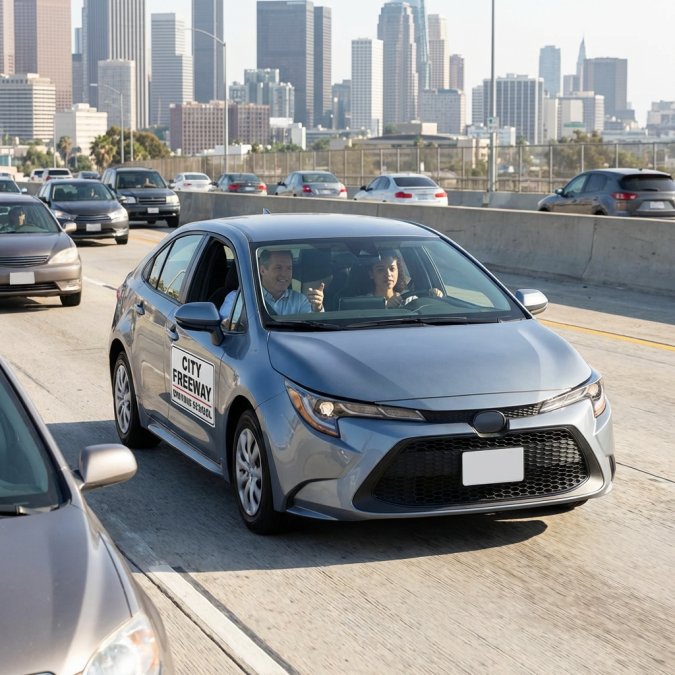
A common rule of thumb for wet roadways is to reduce speed by one-third. City of San Jose guidance on general wet road safety Many drivers treat the posted limit as a target, but wet pavement changes what a safe speed is.
- Drop your speed before you reach a curve, not inside it
- Ease off the gas early when rain starts, not after you feel the car slide
- Leave extra room for merging and lane changes on the freeway
How to Avoid Hydroplaning on Wet Roads
Hydroplaning happens when a layer of water builds up between your tires and the road. The car stops gripping and can slide with little warning.
The best way to avoid it is to slow down and stay out of deep standing water. Watch out: sudden acceleration on a wet surface is one of the most common triggers for a skid.
If you feel the steering go light, do not brake hard. Ease off the accelerator, keep the wheel steady, and let the car slow down until the tires grip again.
Maintaining Safe Following Distance in Rain
Wet roads lengthen your stopping distance, so you need more space between you and the car ahead. Research on lane-keeping in heavy rain shows that driver performance changes in wet conditions, which is one reason extra space matters. University of Wyoming study comparing driver lane-keeping in clear and rainy conditions
Count the seconds between you and the vehicle ahead. In rain, leave a much longer gap than you would in dry weather. Maintaining safe following distance in rain is one of the easiest habits to practice in a lesson.
Braking, Steering and Using Your Lights Correctly
Braking, steering and lighting are three separate skills that all change in heavy rain. Treat them as one system: smooth inputs, early decisions, and lights that make you visible rather than just helping you see.
Braking. Brake earlier and lighter than you would in dry weather, and finish your braking before you enter a curve. Hard braking on wet pavement can lock the wheels and start a skid. If your car has anti-lock braking, press firmly and hold steady rather than pumping the pedal; the system pulses the brakes for you and lets you keep steering. On a car without anti-lock braking, squeeze the pedal progressively and release the moment you feel the wheels lock, then reapply. Watch out: stabbing the brake mid-corner is the fastest way to lose the front end on wet asphalt.
Steering. Make one smooth input instead of a series of corrections. Grip the wheel at nine and three and keep your eyes farther down the road than usual, because at highway speed a wet lane gives you less margin to react. If the car begins to slide, look and steer where you want the front of the car to go and ease off the gas rather than adding steering angle.
Lights. Turn on your low-beam headlights as soon as rain starts, not when visibility gets bad. Low beams make your car visible to others, which matters more in rain than what you can see. Treat wipers-on as lights-on. Use your wipers at a speed that keeps the glass clear without streaking, and run the defroster on a low setting to stop the inside from fogging. Skip the hazard flashers while moving; they override your turn signals and make your intentions harder to read. Watch out: high beams in heavy rain reflect off the water and make visibility worse, so stay on low beams.
Tires. Tread depth and pressure decide how much water your tires can channel away. Check tread with the quarter test (insert a quarter into the tread; if you can see the top of Washington's head, the tire is worn) and check pressure monthly when tires are cold. Worn tires lose wet grip first, long before they look bald.
This is exactly the kind of skill set that is hard to learn from an article. City Freeway Driving School builds braking, steering and lighting habits through structured behind-the-wheel practice, with flexible scheduling 7 days a week for lessons in Irvine, Orange, Santa Ana, Tustin, Costa Mesa, Anaheim and many more cities in Orange County, CA.
Tips for Driving in Rain at Night
Night rain is one of the harder combinations drivers face. Two things happen at once: wet asphalt reflects light instead of absorbing it, and oncoming headlights scatter across that reflective surface. The result is glare that washes out lane markings and hides pedestrians and cyclists until they are close.
Manage the glare. Look toward the right edge of your lane, not at the oncoming lights, and use the white fog line as your guide. Dim your instrument panel so your eyes stay adapted to the dark. Keep the windshield clean inside and out, because a smudged film on the glass turns every headlight into a starburst; a quick wipe with an interior glass cleaner before a rainy week makes a real difference. If glare is severe, slow down until your stopping distance fits inside what you can actually see.
Adjust your following distance for night. In daylight rain you might leave four seconds; at night in heavy rain, stretch that further. Many drivers increase their following distance at night, because headlights show you the road but not the hazards beside it.
Watch the road surface, not just the lights. Painted lines and raised reflectors are your best lane guides when the surface is dark and wet. Where markings fade, use the edge line and the position of the car ahead rather than guessing the center.
Handle the anxiety. Night rain is where panic shows up most: drivers grip the wheel, fixate on the headlights behind them, and stop scanning. The fix is mechanical, not mental. Breathe, loosen your grip, drop your speed, and narrate what you see ahead. If a driver behind you is tailgating with bright lights, change lanes when it is safe rather than speeding up to create space.
Prepare the car for night rain. Make sure both headlights and taillights work, keep the washer fluid full, and replace wiper blades that streak. A dirty or worn blade turns night glare into a smear you cannot see through.
If night rain makes you nervous, that is a skill gap, not a personality trait. City Freeway Driving School offers behind-the-wheel practice, with flexible scheduling 7 days a week for students in Irvine, Orange, Santa Ana, Tustin, Costa Mesa, Anaheim and many more cities in Orange County, CA.
What to Avoid: Cruise Control, Puddles and Sudden Moves
Three habits cause many wet-weather problems. Avoid cruise control, because it can keep the car at speed when you need to slow. Avoid large puddles and standing water, because they can hide potholes and cause hydroplaning. Avoid sudden steering or braking moves, because they upset the car's balance on slick pavement.
Building Rain Driving Confidence With Professional Practice
Many drivers feel nervous about rain because they have never practiced in it. Structured lessons let you build control in a safe setting with an instructor beside you. Refresher lessons can also help experienced drivers who have lost confidence on the freeway.
City Freeway Driving School offers behind-the-wheel training with flexible scheduling 7 days a week.
Driving Lessons in Orange County for Teens and Adults. We are City Freeway Driving School in Tustin, Serving most cities in Orange County, CA. Pricing depends on the package you choose, so visit our website https://cityfreewaydrivingschool.com/ for current prices or a quote. Any questions about our services, please call our office number 714-734-9030.
Frequently Asked Questions
What is the best way to handle heavy rain while driving?
Slow down, turn on your low-beam headlights, and increase your following distance well beyond what you use in dry weather. Adjusting your pace in rain is expected. Keep steering and braking inputs smooth, and avoid sudden lane changes. If visibility drops sharply, pull off the road safely in a well-lit area and wait for conditions to improve rather than continuing at speed.
Is it safe to use cruise control during heavy rain?
No. Cruise control can keep the car accelerating when wheels begin to lose grip, which makes hydroplaning harder to recognize and recover from. It also prevents you from easing off the throttle quickly if traffic slows ahead. Keep your foot on the accelerator so you can respond to changes in traction, and maintain a generous following distance. Manual control gives you more precise input when the road surface is unpredictable.
How do you prevent hydroplaning on wet roads?
Prevent hydroplaning by slowing down before you reach standing water, keeping your tires properly inflated, and checking that your tread depth is adequate. Avoid driving through deep puddles when you can steer around them. If you do lose contact with the road, ease off the accelerator, avoid braking hard, and steer gently in the direction you want to go until the tires regain grip.
What should you do if your car starts to skid in the rain?
Take your foot off the accelerator, avoid slamming the brakes, and steer gently in the direction you want the car to travel. Quick corrections often make a skid worse. If your vehicle has anti-lock braking, apply steady firm pressure rather than pumping the pedal. Once the tires regain traction, straighten the wheel and resume a slower, controlled speed. Practicing these responses with a certified instructor in a safe setting can help them feel automatic when conditions are real.