 blog
blog
Best Driving Schools in Orange County: 2026 Guide
Table of Contents
- How to Compare Driving Schools in Orange County
- Teen Driver Education Requirements in California
- Behind-the-Wheel Training Cost: What You're Actually Paying For
- How to Pass the California DMV Road Test
- Programs Built for Nervous Drivers and Adults Starting Late
- Orange County Traffic Challenges Your Instructor Should Know
- Frequently Asked Questions
Last Updated: September 14, 2026
How to Compare Driving Schools in Orange County
Finding the best driving schools in Orange County starts with one shift in mindset: you are not shopping for the cheapest lessons, you are shopping for the highest chance of passing your road test on the first attempt. That distinction matters because California's teen requirements are strict, and a poorly structured program can leave you paying twice. This guide from City Freeway Driving School breaks down what actually separates a great school from an average one, what you should expect to pay for, and how to spot a program that will get you test-ready.
Most people compare schools on price alone. That is a common mistake.
Here is what actually matters when you evaluate a program:
- DMV certification of the school and its instructors
- Behind-the-wheel hours included, not just classroom time
- Familiarity with local test routes and DMV offices
- Instructor patience and teaching style, especially for nervous students
- Scheduling flexibility for teens with school and sports commitments
What Separates a Good Driving School From a Great One
A good driving school gets you seat time. A great one gets you test-ready.
The difference shows up in three places. First, curriculum: a strong program follows a structured progression from parking lot basics to freeway merging, not a random tour of surface streets. Second, instructor quality: a licensed instructor who explains why a maneuver matters builds judgment, not just muscle memory. Third, honesty about readiness. A great school helps you assess your readiness for the test.
Teen Driver Education Requirements in California
California requires teen drivers to complete a structured path before getting a full license. The sequence is driver education, then a permit, then supervised behind-the-wheel training, then a provisional license.
The California DMV teen licensing requirements outline the core steps, and they are not optional. Skipping any stage delays your license. Here is how the process breaks down.
Permit, Provisional License, and Behind-the-Wheel Hours
The path runs in a fixed order:
- Driver education course completed before or alongside permit prep
- Instruction permit obtained after passing the written knowledge test
- Supervised driving practice with a licensed adult
- Professional behind-the-wheel training with a certified instructor
- Provisional license issued after passing the road test
The exact hour requirements and age thresholds change periodically, so always confirm current figures with the California DMV before you enroll. What does not change is the value of professional instruction during the supervised phase. Parents can log practice hours, but a certified instructor catches the habits that examiners mark down.
| Stage | What It Involves | Who Supervises |
|---|---|---|
| Driver education | Classroom or online course | Self-paced |
| Permit | Written knowledge test | DMV |
| Behind-the-wheel training | Professional lessons | Licensed instructor |
| Practice driving | Logged hours | Parent or adult |
| Road test | DMV evaluation | Examiner |
Behind-the-Wheel Training Cost: What You're Actually Paying For
Behind-the-wheel training cost is where most buyers get confused, because schools quote prices in different units. Some advertise a flat rate per lesson, some quote a per-hour rate, and some bundle hours into packages with pickup, insurance, and the test vehicle folded in. To compare fairly, convert every quote to a single number: effective cost per instructional hour, including everything the lesson does and does not cover.
Here is the math most buyers never run:
- Hourly rate × hours needed = base cost.
- Add pickup and drop-off. A school that drives to your home or school saves you two trips per lesson. If it charges for that, add it back in.
- Add the test vehicle. Some schools include the use of a dual-control car for the DMV road test; others charge it as a separate line item. That single fee can swing the total by a meaningful margin.
- Add re-test lessons. If you fail, do you pay full price for the next block? Ask before you book.
Package Deals vs. Hourly Rates
Package deals bundle a set number of hours at a lower per-hour rate. Hourly rates give you flexibility but cost more per lesson.
- Choose a package if you are a first-time driver who needs a predictable number of lessons before the test. The per-hour rate drops, and you avoid the risk of running out of hours mid-stream.
- Choose hourly if you only need a refresher on specific skills like parallel parking, freeway merging, or a single test-route run-through.
- Watch for packages that exclude the DMV road test vehicle, pickup service, or the certificate of completion some insurers ask for.
City Freeway Driving School offers 6, 10, and 16-hour behind-the-wheel packages, so you can match the block to your experience level.
How to Spot Hidden Fees Before You Pay
Ask for the total out-the-door price in writing before you book. The line items that most often surprise buyers are:
- Test-day vehicle use, separate from your lesson package
- Pickup outside the school's core service area, a mileage or zone surcharge
- Rescheduling inside a short window, a late-cancel fee
- Certificate or completion paperwork, sometimes billed separately
- Extra lessons after a failed test, rarely bundled
None of these are inherently unfair, but they change the real cost. A school that quotes a slightly higher hourly rate with everything included may offer a more transparent total cost than a low-rate school that bills each item separately.
How to Pass the California DMV Road Test
Passing the California DMV road test comes down to preparation, not luck. The examiner is checking whether you drive safely and predictably, not whether you are a perfect driver. But preparation has two halves: the driving itself, and the logistics of test day. Most guides cover only the first half.
The California DMV driver's license information confirms what the test covers: pre-drive checks, basic control, lane changes, intersections, and parking maneuvers. Students who fail often lose points on common habits.
The most common point-losers:
- Failing to check mirrors and blind spots before lane changes
- Rolling stops at intersections
- Poor speed control in school and residential zones
- Weak parallel parking technique
- Not signaling early enough
A good instructor helps students practice these until they are automatic. City Freeway Driving School instructors are familiar with local test routes around the Santa Ana, Costa Mesa, Fullerton, and Westminster DMV offices, which can help students prepare for the conditions they may face.
Test-Day Logistics Most Guides Skip
The driving is only half the test. The other half is showing up with the right paperwork, in the right vehicle, at the right time. A surprising number of would-be test-takers are turned away at the window before they ever start the engine.
What to confirm before test day:
- Appointment. Road tests at busy DMV offices can book out weeks in advance. If your school offers appointment concierge service, helping you find and lock a slot, that can help with scheduling.
- Vehicle eligibility. The car you test in must be registered, insured, and pass a basic safety check. A dual-control instructional vehicle removes almost all of that risk.
- Passenger requirement. A licensed adult driver must accompany you to the test. If your school provides the test vehicle, the instructor typically fills that role.
- Documents. Bring your permit, proof of insurance for the test vehicle, and any completion certificates your school issues.
Why the Test Vehicle Matters
Testing in a car you have never driven can be a challenge. Mirrors, seat position, brake feel, and turning radius all differ between vehicles, and the first five minutes of the test are exactly when examiners form their impression.
City Freeway Driving School builds this into its behind-the-wheel packages, so the car you practice in on the last lesson can be the car you test in on test day.
Programs Built for Nervous Drivers and Adults Starting Late
Nervous drivers are not a niche. Adults starting late, drivers returning after a lapse, and newcomers to California all need a different approach than a confident teenager.
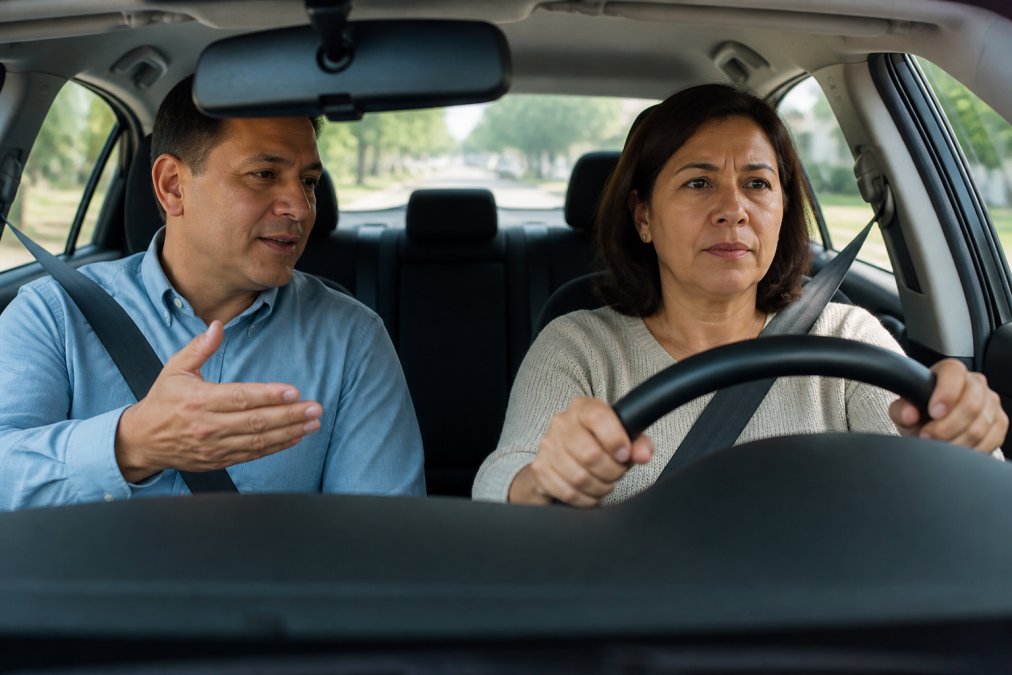
Programs for anxious students can slow the pace and rebuild confidence before adding complexity. This may involve starting on quiet residential streets, and an instructor who stays calm when a mistake is made can be beneficial.
Adults who learned to drive elsewhere often need to adapt to California rules. A patient instructor who explains the local expectations, from right-turn-on-red to freeway merging, can help bridge that gap.
Orange County Traffic Challenges Your Instructor Should Know
Orange County driving is not generic driving. Your instructor should know the specific conditions you will face on local roads and freeways.
The challenges that trip up new drivers here include heavy freeway merging on the 405 and 5, complex multi-lane intersections, and dense school-zone traffic during drop-off hours. A school that only teaches on quiet streets may not fully prepare you for all driving conditions.
That is why freeway training and route familiarity matter. Practicing merges, lane discipline, and exit planning on real freeways builds the confidence that surface-street lessons cannot. City Freeway Driving School builds this into its behind-the-wheel packages, with instructors who know the county's traffic patterns firsthand.
Comparing driving schools in Orange County is really about matching your situation to the right program. Teens need a structured path through education, permit, and behind-the-wheel training. Adults and nervous drivers need patience and a pace that builds confidence. Everyone needs an instructor who knows the local test routes and the real traffic conditions.
City Freeway Driving School provides DMV-compliant driver education and behind-the-wheel training for teens and adults across Orange County, with a CA-approved 30-hour online driver education course, flexible evening and weekend scheduling, and 6, 10, and 16-hour behind-the-wheel packages taught by certified instructors who know the Santa Ana, Costa Mesa, Fullerton, and Westminster DMV offices. Explore courses with City Freeway Driving School and get behind the wheel with a program built to get you test-ready.
Frequently Asked Questions
What should I look for when choosing a DMV-licensed driving school in Orange County?
Check that the school is DMV certified and that instructors are licensed and background-checked. Ask whether the curriculum covers parallel parking, freeway training, and defensive driving techniques. Confirm the school provides a certificate of completion for teen driver education and that its instructional vehicles pass regular safety inspections. Also ask about scheduling flexibility, since teens with school and sports commitments often need evening or weekend lessons.
How many hours of behind-the-wheel training are required for teens in California?
California requires teen drivers under 18 to complete 50 hours of supervised driving, with 10 of those hours at night. While only 6 hours of professional behind-the-wheel training with a licensed instructor are required by the DMV, many families choose 10 or 16-hour packages for extra practice. The remaining hours can be logged with a parent or guardian. A DMV-approved driver education course is also required before getting a permit.
How much do driving lessons cost in Orange County?
Behind-the-wheel training cost varies by school, package size, and whether you choose a single lesson or a bundled deal. Pricing depends on the number of hours, instructor availability, and any add-ons like DMV appointment concierge services. Rather than quoting a flat rate, it's best to contact schools directly for current pricing. Compare what each package includes, not just the hourly rate, since some schools bundle permit test prep and road test practice.
Are online driver education courses accepted by the DMV?
Yes, the California DMV accepts online driver education courses as long as the provider is DMV-approved. These courses satisfy the 30-hour driver education requirement for teens under 18. After completing the course, you receive a certificate of completion, which you'll need when applying for your instruction permit. Adults 18 and older are not required to take driver education, though many choose to for extra preparation.